Independent Market Study · Pest Control · FrancePest in Class - SAPIAN's Next Growth Phase
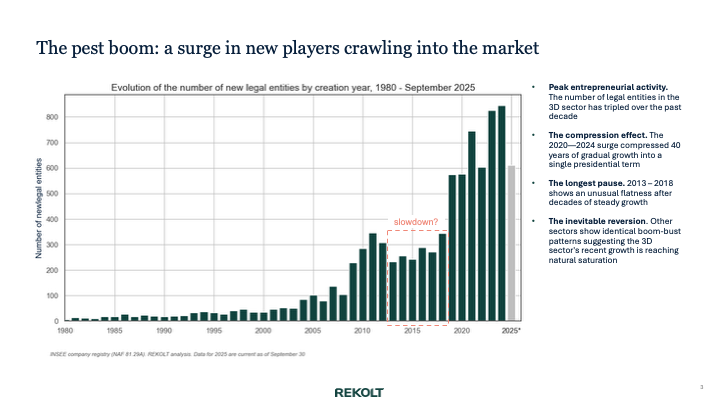
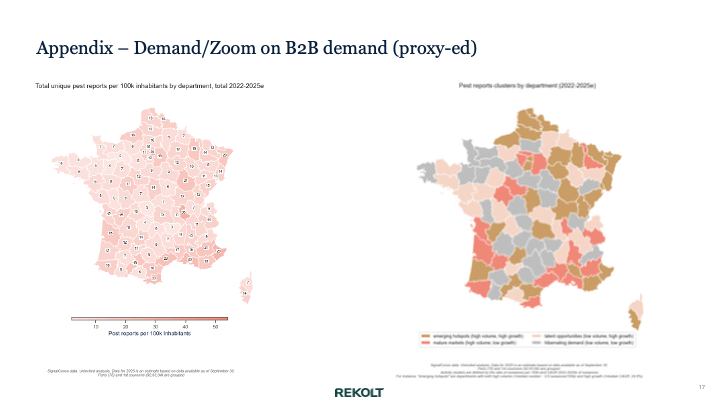
The French pest control sector has tripled in active entities over the past decade, compressing 40 years of gradual growth into a single post-COVID surge. Yet beneath the noise, a clear structural picture emerges : one that rewards disciplined, data-driven expansion over reactive headcount growth. This independent study by REKOLT maps the full competitive landscape of the 3D sector (Dératisation, Désinsectisation, Désinfection) across mainland France, combining INSEE company registry data, public tender intelligence (BOAMP), and B2B demand proxies to identify where opportunity outpaces competition.
Key findings:
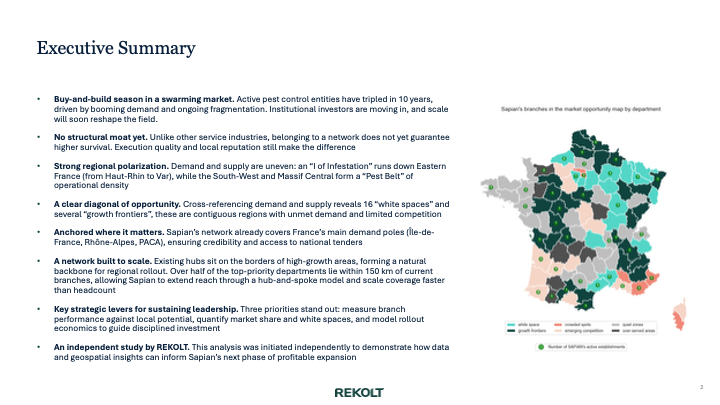
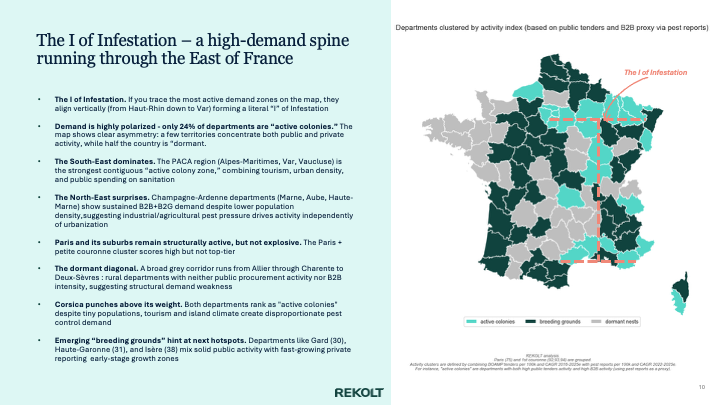
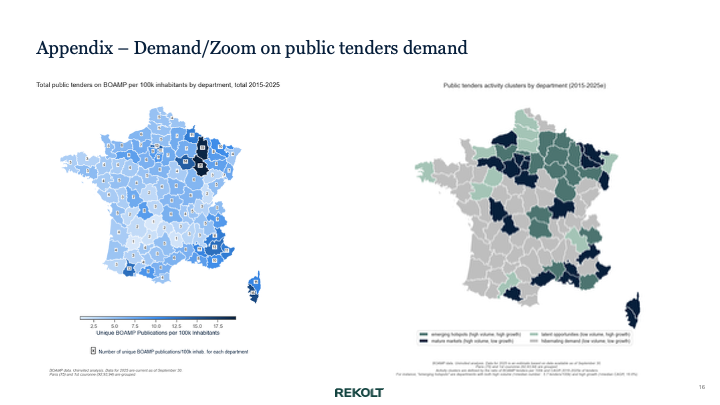
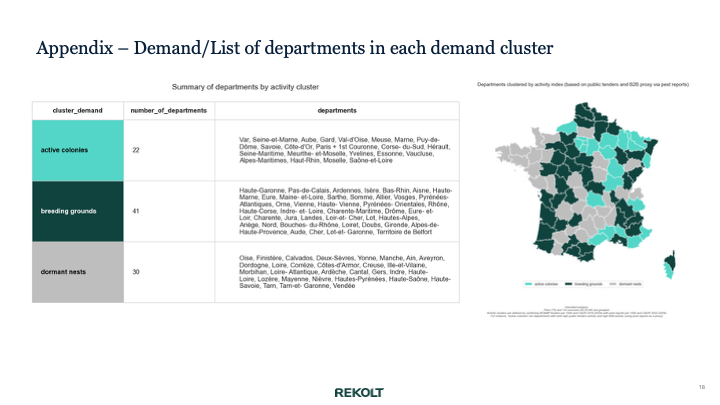
An "I of Infestation" runs vertically through Eastern France, from Haut-Rhin down to Var, concentrating the highest demand density in the country
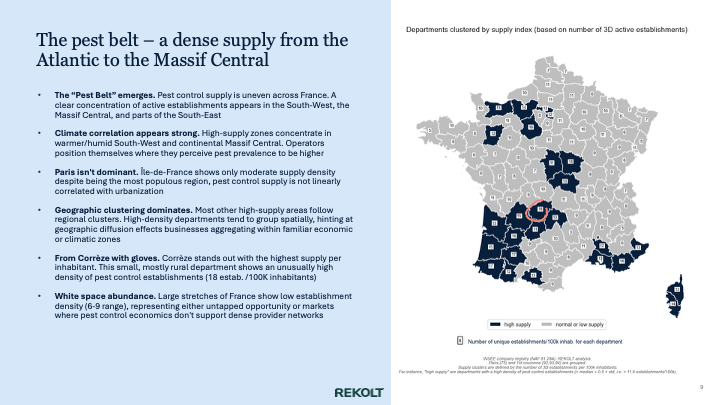
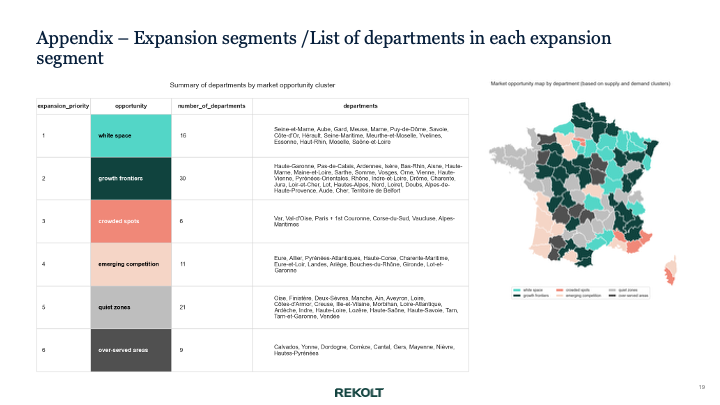
A "Pest Belt" of oversupply stretches across the South-West and Massif Central : high operator density, but not matched by proportional demand.
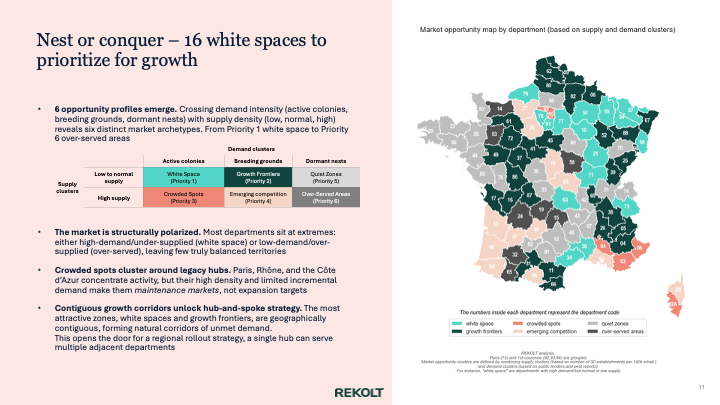
16 white space departments combine active demand with limited supply, forming a natural expansion corridor from Grand Est to Occitanie.
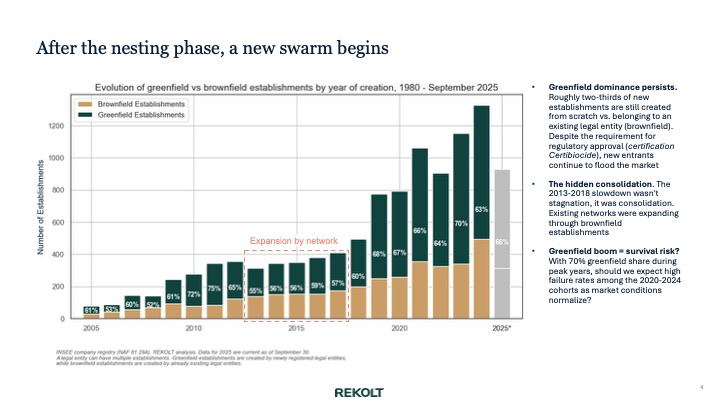
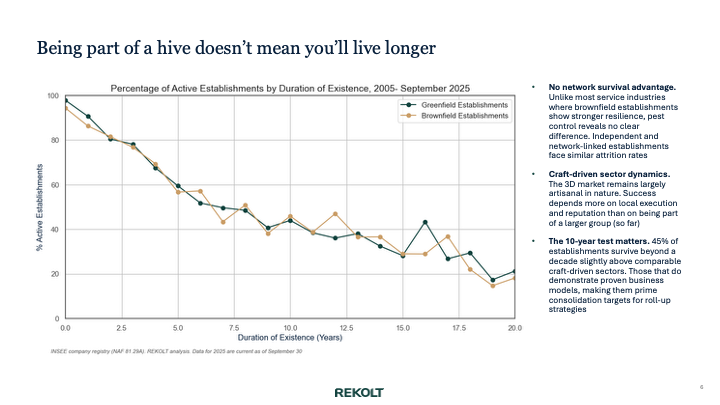
Network membership does not guarantee survival. Unlike most service industries, independent and chain-affiliated establishments show identical attrition rates : local execution still wins.
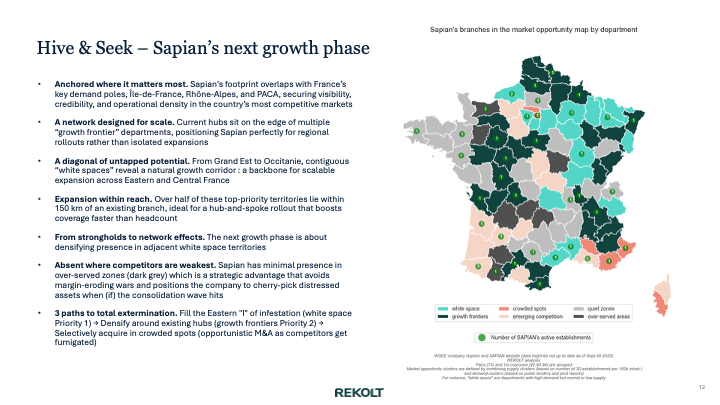
SAPIAN is already anchored in France's three main demand poles (Île-de-France, Rhône-Alpes, PACA). Over half of its top-priority expansion targets lie within 150 km of an existing branch, making a hub-and-spoke rollout both feasible and capital-efficient.
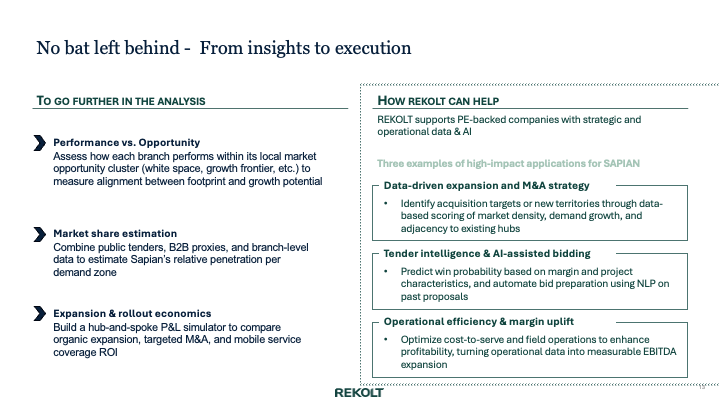
This analysis was initiated independently by REKOLT to demonstrate how geospatial and market data can inform the next phase of profitable, disciplined expansion for PE-backed operators in fragmented service sectors.